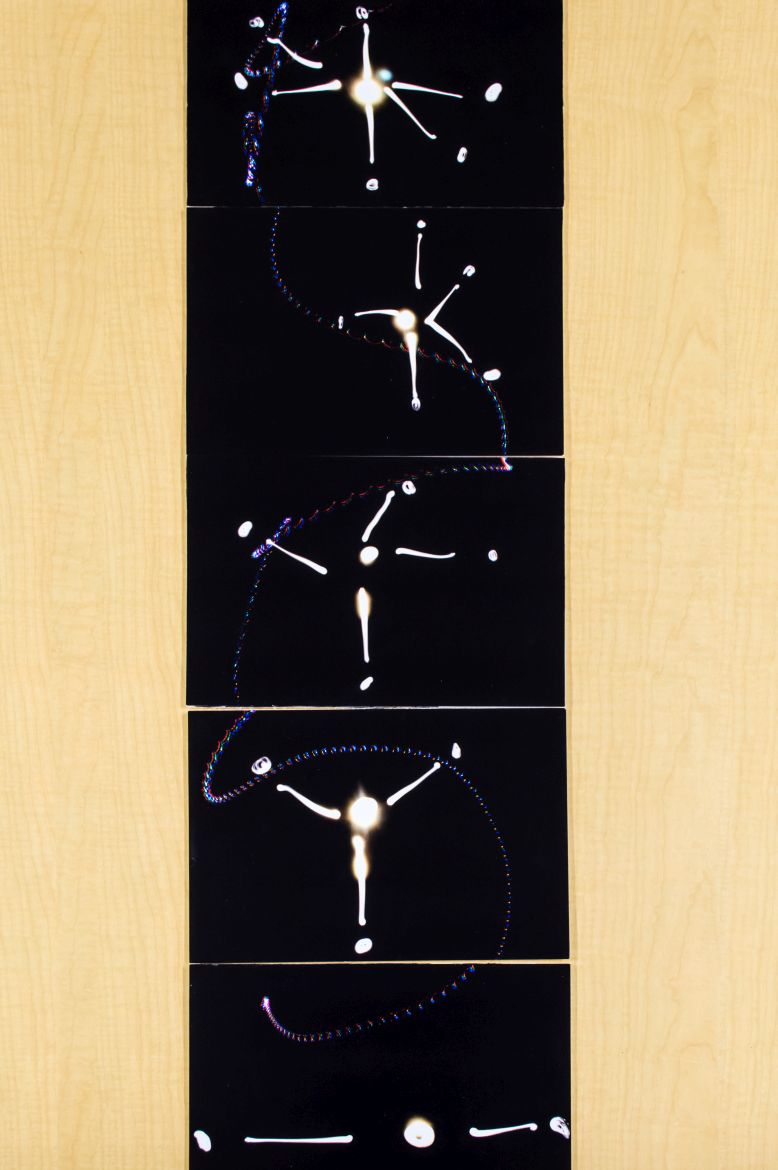


Photography is often not considered a form of art. Of course, anyone can grab a camera, or a mobile phone, while at it, and snap a picture. The picture might not look incredible, but it's a picture nonetheless. What makes photography an art? As a photographer myself, I'd say it's the idea it carries. There must be an idea, a thought behind the picture for it to be considered art. A picture without a back story, or an idea of some sort, a concept, is only a picture, and not an artwork. There must be a purpose to the picture.
This is what I had in mind when I chose to pick photography as my medium for this project. Photography's purpose is to carry an idea through an image. And that was exactly what I needed to do with this project.
Another important aspect of photography would be light. Without light, not only can't we see, but there's no way for photography to simply be. Light is essential, it brings the subject to life, and with the right amount of light, or with the right technique, it can make a huge different in the resulting picture. With that in mind, I decided to use light painting as a technique for this project. The result is not only worth the effort, but the possibilities are endless.
Using light painting as a technique means I would have to draw something. Automatically, I thought of molecular shapes. I thought it would be interesting to represent them that way, and I had a feeling the result would be quite appealing, too.
So I had my technique, I had my subject, I knew what I wanted to do. But what was my idea? What was my thought process behind this, what were the ideas behind those pictures? In fact, I had four, following Atkins's 9 big ideas in chemistry. First one, matter is made of atoms. It is the base of everything; atoms form every single material component of the universe. That concept is most likely the most important aspect of modern chemistry, and is the guiding line not only to chemistry, and all of Atkins's big ideas, but also to my artwork. Each of my 6 frames illustrate atoms, first and foremost. They're represented as circles on my pictures, and are bonded to one another, which brings me to the second idea depicted in my artwork: chemical bonds form when electrons pair. Although we cannot see the electronic structure of the atoms I've drawn, in my pictures, we know that atoms do have electrons, and that when they pair, chemical bonds are created. These bonds, among other things, determine how the molecules formed by multiple atoms will look like. This is where the third idea, the shape of molecules, comes into play. It is the main idea of my artwork and constitutes most of it.
My artwork is composed of five frames, or pictures, each portraying a type of molecular shape. I’ve chosen to represent the basic geometries of the molecules of steric number from 2 to 6 (with no lone pairs, as it is hard to represent them considering the technique I'm using). In other words, each of my frames illustrate one type of molecular shape among the following: linear, trigonal planer, tetrahedral, trigonal bipyramidal, and octahedral.
So those were the three ideas portrayed in my artwork. However, I've mentioned earlier I had made use of 4 of Atkins's big ideas. The thing is, the fourth idea was explored through the technique I've used: light painting. So not only was I able to portray some of Atkins's big ideas in my artwork, but I also involved some of them during the creation of the artwork itself.
Light is a form of energy. We cannot, however, create light. In fact, it is impossible to create any form of matter or energy, as Antoine Lavoisier once said, "nothing is lost, nothing is created, everything is transformed." Therefore, energy is always conserved, as states Atkins's fourth big idea of chemistry. This is a concept I included in my approach; as I have no way of creating light, I used transformation of energy to produce it. With a tool as simple as a flashlight, it was possible to used the flashlight's battery's stored chemical energy, turn it into electrical energy, and with that, transform this energy into light through the bulb of the flashlight. And throughout this entire process, energy is conserved.
And this is what concludes the rationale behind LUX (which, quite conveniently, means "light" in Latin). This is my artwork, this is my intention behind it, this is my design.